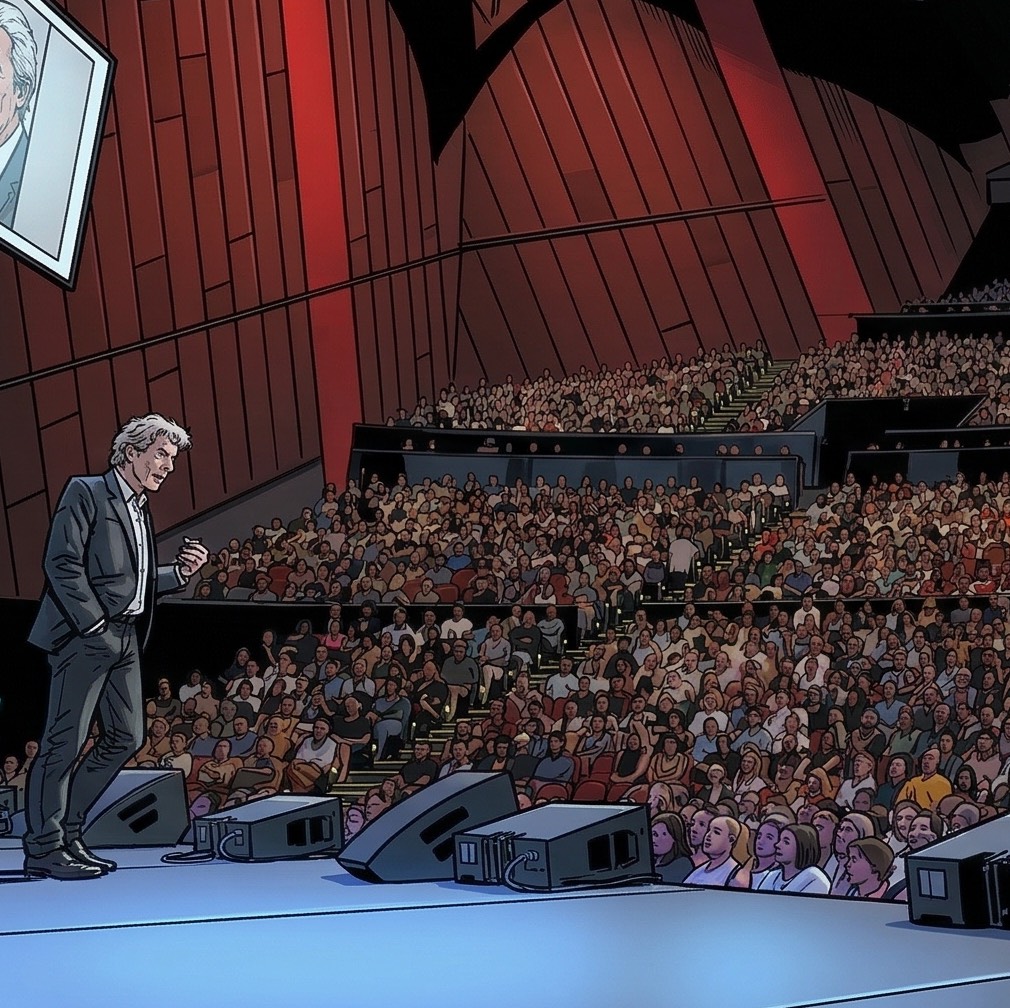
From speechwriting to ghostwriting, the key to writing for an executive is to know how they sound, how they'd like to sound, and what their audience needs to hear.
Most people rise to the level of executive by having some ability to already do that, but often they don't realise that their ability is narrower than they believe. Their audience has been the company they started and its clients or the company that hired them and its clients. When their audience is larger, or they want it to be larger, they can sometimes freeze, like an affable podcaster becoming stilted under TV studio lights.
A lot of what I try to do when working with executives is fostering their innate ability. This involves talking to them about their experiences and beliefs and shaping those into stories they can then tell. I then take those stories away and do research that connects them to wider trends and historical lessons. In the end, I can provide them with a number of modular stories that can be applied in almost any situation and to almost any format.
As you probably expected, I can't talk at length about a lot of the executive communications work I've done. But below are two former clients:
- Emajin Golf: I worked with CEO Raj Narayan on a series of speeches. My strategy was to take her considerable charm and remarkable life story and refine them into format-specific forms. So there was a keynote speech at a conference, a short ten-minute speech to women in a golf gym, and an introductory speech to one of Emajin Golf's events.
- AHRI: After leaving my role as editor of HRM, CEO of AHRI Sarah McCann-Bartlett contracted me to write a speech for a large conference. It was one of her first big speeches as the CEO. Having just spent years in HR-land, writing and researching everything an Australian HR professional could possibly be interested in, I was well placed to give her a speech that was steeped in the knowledge and lingo of the industry.